
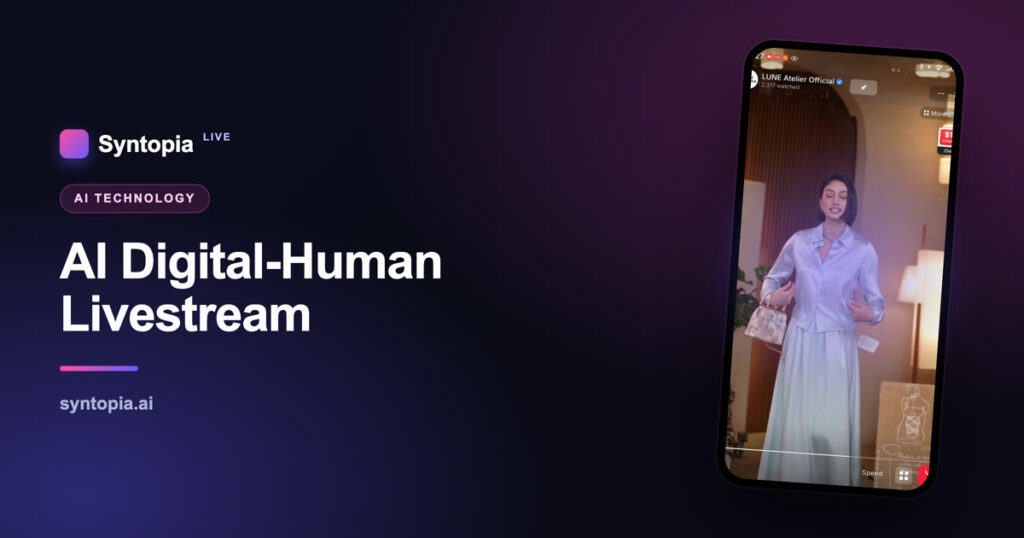
An AI digital-human livestream is a live video stream hosted by a photorealistic AI digital human instead of a real person on camera. The digital human is rendered in real time — speaking your script, lip-syncing to its voice, and reacting live to the audience — so it looks and behaves like a genuine presenter, but can run for hours in any language. AI digital-human livestreams now power 24/7 live shopping, product launches, Q&As and brand content. This guide explains how an AI digital-human livestream actually works, how it differs from a pre-recorded video, what you can do with it, and how to start one.
What this guide covers
- What is an AI digital-human livestream?
- How it works, step by step
- Live vs pre-recorded: why real-time matters
- Real-person-driven digital-human livestreams
- What you can do with an AI digital-human livestream
- Where to run them
- How to start
- Frequently asked questions
What is an AI digital-human livestream?
It’s a live broadcast fronted by a digital human — a photorealistic, AI-powered virtual presenter — rather than a person physically on camera. The word that matters is live: the digital human is generated and animated in real time, so it can respond to what’s happening in the stream, not just play back a fixed clip. That real-time quality is what makes it a livestream rather than a video, and it’s what lets the host interact with viewers as they arrive and comment.
How an AI digital-human livestream works, step by step
- The digital human is loaded. A photorealistic avatar — created from scratch or built from consented footage of a real person — acts as the on-screen host.
- A voice speaks the content. A natural AI voice (or a consented voice model) delivers the script in the chosen language.
- Real-time rendering animates the host. A rendering engine drives the face and body live, syncing the lips precisely to the audio so the host looks like a real presenter on camera.
- An AI brain handles understanding. A connected language model lets the host interpret live comments and respond naturally — greeting joiners and answering questions.
- Interaction closes the loop. The host reacts to the room in real time, making the stream genuinely two-way. Our guide to interactive AI avatars covers this in depth.
Together, these turn a static avatar into a living presenter. The real-time rendering and interaction are the hard parts — and the reason an AI digital-human livestream feels nothing like watching a recorded video.
Live vs pre-recorded: why real-time matters
| Pre-recorded AI video | AI digital-human livestream | |
|---|---|---|
| Timing | Fixed, made in advance | Generated live, in the moment |
| Interaction | None — it can’t react | Responds to comments and viewers |
| Use case | Ads, explainers, evergreen clips | Live selling, Q&As, events, 24/7 shops |
| Feel | A video | A live presenter |
Both have their place. But for live commerce — where answering “is this original?” or “how much with shipping?” in the moment is what converts — only a true livestream works.
Real-person-driven digital-human livestreams
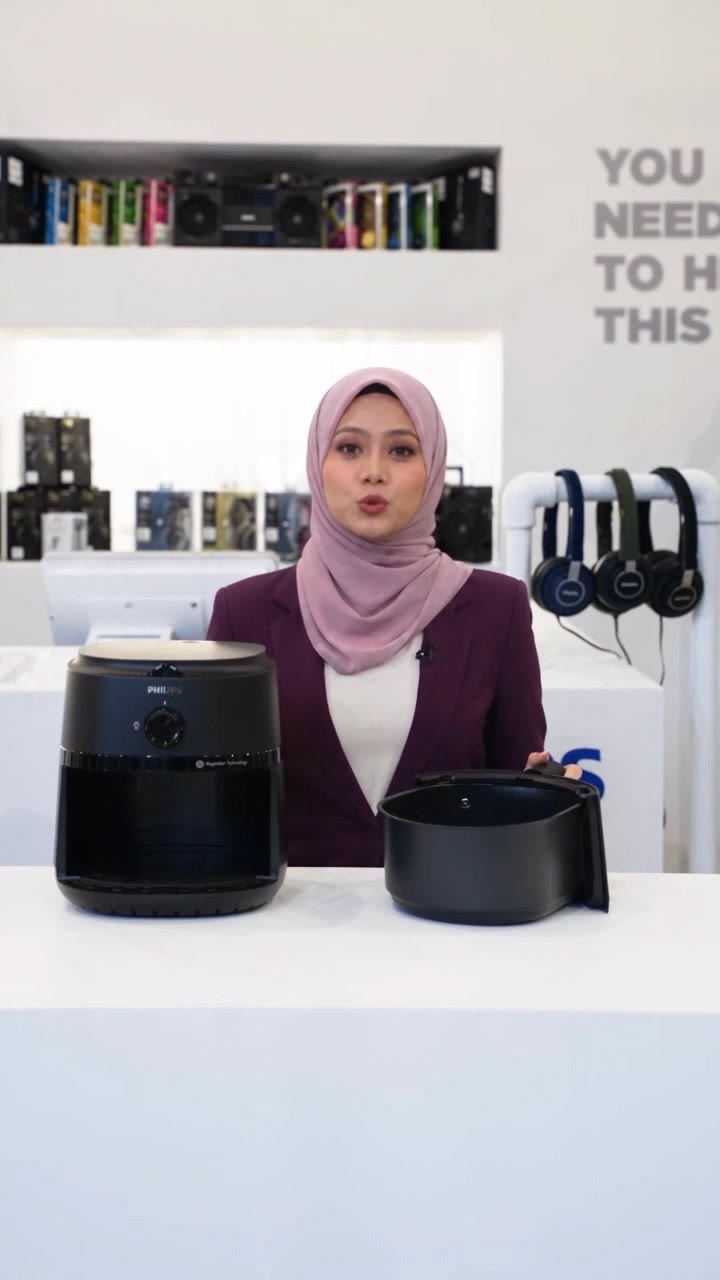
There’s a second model worth knowing: the real-person-driven livestream. Here, a real human drives the stream from behind the scenes — bringing genuine presence and judgement — while AI handles the lip-sync, language and scale. One real host can even power many rooms at once (one-to-many), each presenting independently. It’s the best of both worlds: human authenticity with AI reach. This is how serious operators run large live operations without a presenter per room.
What you can do with an AI digital-human livestream
- 24/7 live selling. Keep a shopping channel on air overnight and across time zones — the core of AI live selling.
- Multi-language streams. Present in native languages per market, no translated subtitles.
- Live Q&As and support. Answer audience questions in real time.
- Product launches and events. A consistent, always-available host.
- Scale across rooms and accounts. Grow with software instead of headcount.
Where to run AI digital-human livestreams
You can run them on the major live platforms — TikTok Shop, Shopee and YouTube among them — and they’re allowed on all of them with disclosure and honest commerce. See the platform-specific rules in our guides on TikTok, Shopee and YouTube.
How to start an AI digital-human livestream
The quickest path is a platform that handles the avatar, voice and real-time rendering for you. Create your digital human, build your script, connect an AI brain for interaction, and go live. Our step-by-step AI live seller tutorial walks through the whole process on TikTok Shop, and the complete guide to AI livestreaming avatars gives the bigger picture. When you’re ready, see how Syntopia runs AI digital-human livestreams.
Frequently asked questions
What is an AI digital-human livestream?
It’s a live video stream hosted by a photorealistic AI digital human instead of a person on camera. The host is rendered in real time — speaking a script, lip-syncing, and reacting to the audience live — so it behaves like a genuine presenter and can run for hours in any language.
How is it different from a pre-recorded AI video?
A pre-recorded video is fixed and can’t react. An AI digital-human livestream is generated live and interacts with viewers — answering comments and questions in the moment — which is essential for live selling.
Is the digital human really responding, or just reading a script?
Both. It presents a prepared script, and — when connected to a language model — it also understands and responds to live comments in real time, greeting joiners and answering common questions.
Can a real person control an AI digital-human livestream?
Yes. In a real-person-driven livestream, a human drives the stream from behind the scenes while AI handles lip-sync, language and scale. One host can even power multiple rooms at once.
What can I use an AI digital-human livestream for?
The most common use is 24/7 live selling, plus multi-language streams, live Q&As, product launches and events — anywhere you want an always-available, consistent live presenter.
Is it allowed on TikTok, Shopee and YouTube?
Yes, with disclosure and honest commerce. Each platform has its own rules — see our dedicated guides for TikTok, Shopee and YouTube.
The takeaway
An AI digital-human livestream puts a photorealistic, real-time AI host in front of your audience — presenting, lip-syncing and interacting live, in any language, for as long as you need. Whether fully AI or real-person-driven, it turns live video into something you can run around the clock and scale with software. Learn how it powers AI live selling, or see Syntopia’s platform in action.
Written by the Syntopia team. Syntopia builds AI digital humans and real-person-driven live selling for TikTok Shop, Shopee, YouTube and more.