

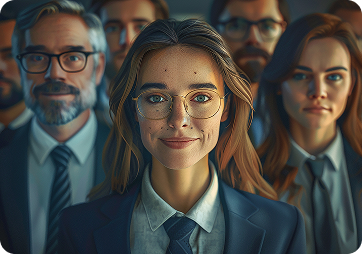
Hyperrealistic AI avatars have crossed a threshold that was unimaginable five years ago. Where digital humans once looked obviously artificial — uncanny valley faces, robotic speech, jerky movement — today’s best AI avatars are visually indistinguishable from real people at broadcast quality. This shift is not just a technological curiosity. It is fundamentally changing how businesses communicate, sell, and scale their presence online.
For TikTok Shop sellers, brand owners, and content creators, the rise of hyperrealistic AI avatars represents one of the most significant commercial opportunities of the decade. This article explains what has changed, why it happened now, and what it means for businesses looking to compete in the live commerce era.
What Makes an AI Avatar Hyperrealistic?
The term hyperrealistic AI avatar refers to a digitally generated human that replicates the visual, vocal, and behavioural qualities of a real person with high fidelity. Unlike older CGI characters or basic deepfake tools, today’s hyperrealistic AI avatars are built using a combination of neural rendering, voice synthesis, and real-time interaction engines that work together to create a seamless live presence.
The key components that make modern AI avatars hyperrealistic include natural facial micro-expressions, lip-sync accuracy that matches spoken words in real time, voice cloning that preserves the subtle qualities of a person’s natural speech, and the ability to respond dynamically to live audience input rather than playing back pre-recorded footage. According to Reuters, the sophistication of AI digital humans deployed in Chinese e-commerce livestreams reached a level in 2024 where many viewers could not tell they were watching an AI at all.
Why Hyperrealistic AI Avatars Have Arrived Now
Several technological and economic forces converged around 2023–2025 to make hyperrealistic AI avatars commercially viable at scale. Advances in generative AI — particularly large language models and neural video synthesis — dramatically reduced the computational cost and time required to produce high-quality digital humans. What once required months of studio work and millions of dollars can now be achieved in weeks at a fraction of the cost.
At the same time, the explosion of live commerce — particularly on platforms like TikTok Shop — created urgent commercial demand for scalable on-camera presence. Sellers who stream live for more hours generate more sales, but human hosts have biological limits. Hyperrealistic AI avatars solve this problem elegantly: they deliver the engagement quality of a real human presenter with the scalability of software.
McKinsey’s live commerce research has documented how consistent live selling drives conversion rates up to 10 times higher than standard e-commerce. Hyperrealistic AI avatars make that consistency possible for businesses that could never afford full-time human hosts.
The Business Case for Hyperrealistic AI Avatars
The commercial argument for deploying a hyperrealistic AI avatar is straightforward once you understand the economics of live commerce. A human host working a typical schedule might stream 4–6 hours per day. A hyperrealistic AI avatar can stream 24 hours a day, seven days a week, across multiple time zones simultaneously, without fatigue, sick days, or performance inconsistency.
For TikTok Shop sellers, this matters enormously because the TikTok algorithm rewards accounts that stream frequently and consistently. An account running a hyperrealistic AI avatar on a 24/7 schedule builds algorithmic authority faster than a human-hosted account with gaps in its schedule. TikTok’s Newsroom has highlighted LIVE shopping as a primary growth lever for the platform, signalling that algorithmic rewards for consistent live sellers will only increase.
Hyperrealistic AI Avatars in Live Commerce: Real-World Results
The most compelling evidence for hyperrealistic AI avatars comes from the live commerce markets that adopted them earliest. In China, where AI-hosted livestreams became mainstream before the technology reached Western markets, results have been consistently strong. AI-hosted streams across categories including fashion, electronics, beauty, and fresh food have demonstrated that viewers engage with hyperrealistic AI avatars at rates comparable to human hosts — and in some cases, higher, because AI avatars never have an off day.
High-profile examples include AI avatar sessions that generated tens of millions of yuan in a single stream. These are not exceptions — they reflect the emerging norm in markets where AI avatar technology has matured. As Shopify’s analysis of live commerce trends notes, Western markets are now entering the adoption curve that Asian markets have already navigated, creating a significant first-mover advantage for sellers who deploy hyperrealistic AI avatars now.
Related Reading
- AI Livestreaming Avatars: The Complete Guide for TikTok Shop Sellers — how to put hyperrealistic avatars to work in live commerce
- The Psychology Behind Human-AI Interaction — why viewers trust and buy from AI avatars
- 24/7 AI Avatar Engagement: How TikTok Shop Sellers Never Stop Selling — the commercial case for always-on AI presence
How Syntopia Creates Hyperrealistic AI Avatars
At Syntopia, creating a hyperrealistic AI avatar for a TikTok Shop seller involves a structured process designed to capture the authentic presence of the person being replicated. The process begins with a professional shooting session that captures the seller’s natural movements, expressions, and speech patterns. This footage becomes the training data for the AI model.
The resulting hyperrealistic AI avatar can then be deployed in live commerce environments — responding to viewer comments in real time, demonstrating products, answering questions about pricing and availability, and driving sales exactly as a human host would. The avatar maintains visual and vocal consistency across every stream, creating a brand presence that viewers recognise and trust. To see what this looks like in practice, book a demo with Syntopia.
Frequently Asked Questions About Hyperrealistic AI Avatars
How realistic do hyperrealistic AI avatars actually look?
At broadcast quality — which is what TikTok Shop viewers see on their phones — today’s best hyperrealistic AI avatars are visually indistinguishable from real people in motion. The quality depends on the technology used; Syntopia’s avatars are built to broadcast standard specifically for live commerce platforms.
Can a hyperrealistic AI avatar respond to live viewer questions?
Yes. Modern hyperrealistic AI avatars include real-time interaction engines that process viewer comments and respond naturally. This is what distinguishes a live AI avatar from pre-recorded video — the avatar is genuinely interactive.
How long does it take to create a hyperrealistic AI avatar?
With Syntopia, the process from shooting session to first live deployment typically takes a few weeks. The timeline depends on the complexity of the avatar and the number of product scripts being trained into the system.