

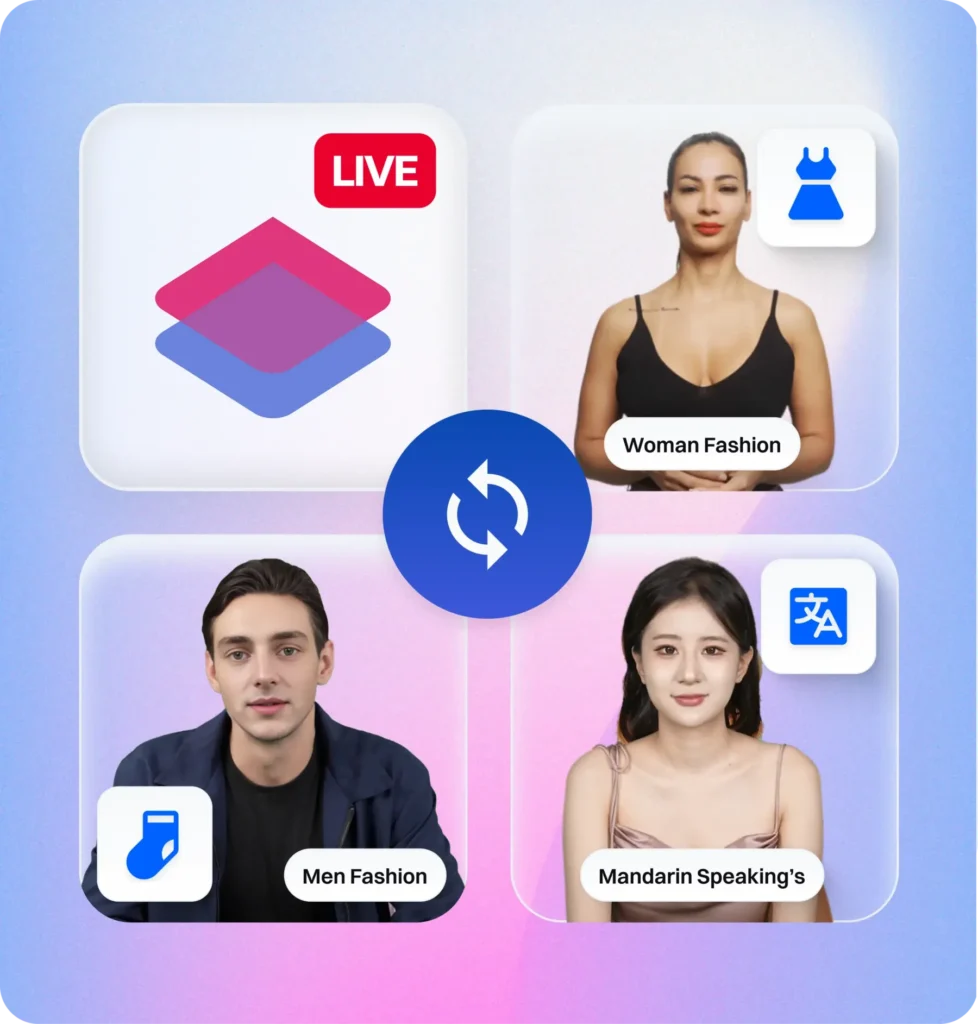
Most content about TikTok Shop live commerce is written by marketers who have read about it. This playbook is different. Syntopia is owned by LiveBuzz Studio — a TikTok Shop Partner (TSP) operating in both the UK and US, and the number one Creator Agency Partner (CAP) in the UK. Our team includes ex-TikTok employees who worked inside the platform before building LiveBuzz Studio. We do not just know how TikTok Shop live commerce works from the outside — we have had access to the internal training frameworks ByteDance used to educate their own Seller Partners.
What follows is a synthesis of those frameworks: the 4-pillar presenting system, the cold start roadmap, the live room team structure, the script methodology, and the post-stream review process that separates accounts that plateau from accounts that scale. This is not surface-level advice. This is the playbook.
Once you have the framework, the next step is putting words to it. For a complete guide to writing the script your host — or your AI avatar — will actually deliver in the live room, read How to Write a TikTok Shop Livestream Script That Actually Converts.
The ByteDance 4-Pillar Framework: What TikTok Actually Trained Their Hosts On
Before tactics, you need the foundation. ByteDance’s Seller Partner training programme was built around four core presenting principles. Every live session — regardless of product category, audience size, or market — should be structured around these four pillars.
Pillar 1: Over-Analyse and Explain in Depth
The most important mindset shift for any TikTok Shop host: your viewers are not watching you. They are half-watching. Your stream is background noise while they scroll, cook, commute, or work. Your job is to say something so specific and detailed that they look up from whatever else they are doing.
This means treating every product as if your viewer has never heard of it, never seen it, and has no idea why they need it. Go into exhaustive detail on every USP. For fashion and beauty: the material weight, texture, how it sits on different body types, what it pairs with, how it behaves in different lighting. For tech: the full spec version and the plain-English “what this means for you” version — because your audience spans both ends of the knowledge spectrum simultaneously.
The instinct to summarise kills conversions. The discipline to over-explain builds them.
Pillar 2: Show Them How to Shop — Every Single Time
TikTok Shop is still new to a significant share of viewers. Every live session has people joining who have never purchased inside a TikTok stream before. If they do not know how to buy, they will not buy — regardless of how well you pitch the product.
Your job is to demonstrate the checkout process visibly and regularly throughout every stream. Show the product link appearing on screen. Show where to tap. Walk through the cart process. Do this at minimum every 15 to 20 minutes. Experienced buyers will not mind the repetition. New buyers will thank you with a purchase. This is non-negotiable at any stage of your account’s growth — because new viewers join every single stream.
Pillar 3: Why to Shop — Build the Case, Not Just the Deal
Here is where most UK and US TikTok Shop hosts fall short. They present the deal like this: “Normally £80, today just £20 at my live room.” That is a price statement. It is not a buying argument.
The advanced approach — one ByteDance’s Chinese TSP training explicitly contrasted with the basic Western approach — builds the why behind the price. Why is it £20 today? Because it is factory overstock and there are 47 units left. Because this is the exclusive launch price for this live session only. Because the brand negotiated a one-off deal specifically for this stream and it disappears after tonight.
The why makes the deal believable. Without it, the brain flags a low price as suspicious. With it, the deal becomes a logical opportunity the viewer would be foolish to miss. Every price needs a reason. Every deal needs a story.
Pillar 4: Repetition — Because Your Audience Is Constantly Rotating
Your TikTok Shop live audience at minute 45 is not the same audience as at minute 5. People join mid-stream constantly. A viewer who joined 10 minutes ago missed your opening pitch entirely. This means your key messages — the deal, the urgency, the story behind the price, how to shop — need to cycle on a regular schedule.
Every 5 to 10 minutes, someone in your room is hearing your pitch for the first time. Treat every repetition as if it is the first time you have said it. Because for someone in the room, it is.
The 3-Phase Cold Start: How to Build a TikTok Shop Live Room From Zero
One of the most practical frameworks in ByteDance’s internal training is the cold start roadmap — a phased approach to your first 15 live streams that gives your account the best possible chance of algorithmic momentum. Most sellers treat early streams as throwaway practice runs. This framework treats them as the most strategically important streams you will ever run.
| Phase | Streams | Primary Goal | What to Focus On |
|---|---|---|---|
| Icebreaker | 1–3 | Establish baseline presence | Consistent timing, stable setup, first loyal viewers — prove to the algorithm you are a reliable broadcaster |
| Climbing | 4–7 | Build algorithmic trust | Drive comment engagement aggressively, increase session duration, refine your script loop |
| Stable Growth | 8–15 | Lock in consistent performance | Optimise based on your own data, build repeat viewer habits, anchor your peak time slots |
Phase 1 — Streams 1 to 3: The Icebreaker
These streams are not primarily about sales. They are about proving to TikTok’s algorithm that you are going to show up. Go live at the same time every day. Keep energy high even if the room has three viewers. The algorithm is evaluating whether you are a consistent broadcaster before it decides to show you to a broader audience. Inconsistency at this stage can delay your momentum by weeks.
Phase 2 — Streams 4 to 7: The Climbing Period
This is where you push for engagement signals aggressively. Every comment, every share, every follow during a live session tells the algorithm to show your stream to a larger audience. Your script should actively and explicitly ask for these actions. “Drop a comment if you have a question.” “Share this with someone who needs this deal.” These are not clichés — they are algorithmic fuel. The climbing period is where your reach either accelerates or stalls based on how well you drive these micro-actions.
Phase 3 — Streams 8 to 15: Stable Growth
By stream 8 you should have real data. Which products generated the most comments? Which time slot brought the highest-converting viewers? Which part of your script loop drove the most add-to-carts? This phase is about doubling down on what the data shows works and eliminating what does not. You are no longer guessing — you are optimising. Your live room has its own performance fingerprint by this stage and your job is to keep refining it.
The 4 Roles Every High-Performing TikTok Shop Live Room Needs
Here is a reality check most solo TikTok Shop streamers have not yet confronted: the top-performing live rooms are not solo operations. They are teams. ByteDance’s internal training defines four distinct roles, each with a specific function that cannot be effectively performed by the same person simultaneously.
| Role | Primary Responsibility | Why It Cannot Be Skipped |
|---|---|---|
| Host | Main presenter — pitches products, drives energy, delivers the script loop | The face and voice of the room, but cognitively overloaded if also monitoring comments and managing screen |
| Assistant Host | Monitors the comment feed, answers product queries (sizing, ingredients, shipping times), flags important questions to the host | Removes the single biggest cognitive burden from the host — a host reading comments cannot also be selling effectively |
| Moderator | Controls room atmosphere, pins key messages, removes disruptive users, maintains energy level throughout the session | The most underestimated role in live commerce — a skilled moderator can rescue a stream where the host is having a bad day |
| Picture Director | Manages what is displayed on screen — product close-ups, pinned links, promotional overlays, what gets shown when | Controls the visual experience that directly drives add-to-cart behaviour; poor screen management loses sales the host just earned |
For solo sellers starting out: you cannot fill all four roles alone. Prioritise getting an assistant host first. The improvement in host performance and comment response rate alone justifies it within a few sessions.
For brands scaling their TikTok Shop operation: all four roles should be filled for any stream running longer than two hours. This is not overhead — it is the infrastructure that makes sustained high-volume live commerce operationally viable. TikTok Shop is projected to exceed $20 billion in sales in 2026 — the brands winning the largest share of that will be operating with this structure.
Script Depth: The Difference Between a Surface Deal and a Story-Driven Sale
This is the insight from ByteDance’s advanced CN TSP training that most directly separates average performers from exceptional ones — and it is almost never discussed in Western live commerce content.
There are two levels of deal presentation in TikTok Shop live commerce.
Level 1: The Surface Deal (What Most UK and US Hosts Do)
“This is our bestselling moisturiser. Normally £45. Today in this live only, you can get it for £19. Tap the link now.”
This is a price statement. It tells the viewer the number but gives them nothing to believe in. The brain hears “£19” and immediately wonders: why is it that cheap? Is something wrong with it? Is this a real deal or a fake one? The doubt that price alone creates is never resolved, because no explanation was given.
Level 2: The Story-Driven Sale (What Advanced Hosts Do)
“This moisturiser has been sitting in our warehouse since we overordered for Christmas. The brand would rather I didn’t say that, but I’d rather be honest with you than pretend there’s some other reason the price is this low. It’s the exact same formula, same packaging, nothing has changed — we just have 47 units too many and they need to move. Once they’re gone tonight, the price goes straight back to £45 and there’s nothing I can do about that.”
The second script converts at a higher rate not because it is more polished — it converts because it is more believable. The story gives the viewer a rational explanation for why the deal exists. The honesty about the brand’s reluctance makes it feel real. The specific unit count (“47 units”) creates genuine scarcity. Every element of the script is designed to resolve the doubt that price alone creates.
Every time you present a deal in a TikTok Shop live, ask yourself this: does my viewer understand why this is available at this price right now? If you cannot answer that clearly, neither can they — and doubt is the enemy of conversion.
Mood Is a Metric: The Variable That Determines Everything Else
ByteDance’s CN TSP training made this explicit in a way Western live commerce content almost never does: host mood is a performance metric, not a soft factor.
The chain is direct and unbreakable: host energy determines room energy. Room energy determines viewer behaviour. Viewer behaviour determines conversion rate. A technically perfect script delivered with flat energy will underperform a rougher script delivered with genuine enthusiasm every single time. This is not motivational advice — it is a causal relationship that ByteDance’s data confirmed across thousands of live sessions.
The practical implications:
- For human-hosted live rooms: Build a pre-stream energy ritual. Check host energy before going live. If it is low, delay, warm up with easier products first, or use the moderator to raise room energy while the host finds their rhythm. Never go live flat.
- For AI-hosted live rooms: This is one of the most underappreciated operational advantages of AI avatar technology. An AI avatar maintains identical energy and delivery quality across hour one and hour twelve of a stream. The mood variable is eliminated entirely. Conversion rate does not decay as the session extends — which for a 12-hour TikTok Shop stream is a fundamental competitive advantage over any human-hosted alternative.
The Video Commerce Advantage: What Live Streaming Can Show That Nothing Else Can
TikTok Shop live commerce has a structural advantage over every other form of e-commerce that most sellers systematically underuse. Shopify’s data shows that around three in four TikTok users are likely to buy something while using the app — and the reason is the video-first discovery experience. Live streaming takes that advantage further: you can show things in real life, in real time, that no product photograph or description can replicate.
You can show how a fabric moves when someone walks. How a foundation looks on three different skin tones in the same session. How a piece of tech actually feels in the hand. How a food product looks when you open the packaging versus how it looks in the marketing photo. These are buying signals that convert viewers who were on the fence — and they are only available to you in a live environment.
The advanced application goes further still. ByteDance’s training made a specific point that stays with any host who hears it: authentic negative information builds more trust than positive claims. If a protein powder does not taste great on its own, say so — and then tell viewers to mix it with apple juice. That willingness to acknowledge a flaw and immediately provide a solution creates a level of credibility that no polished marketing language can manufacture. Viewers who trust you buy from you. Viewers who feel sold to leave.
The 5 Violations That Will Tank Your Algorithmic Reach
ByteDance’s advanced training spent significant time on these because experienced hosts still make these mistakes. Each carries an algorithmic traffic penalty that can set back weeks of momentum.
| Violation | What It Looks Like in Practice | Why TikTok Penalises It |
|---|---|---|
| Redirecting traffic off-platform | Mentioning your website, Amazon listing, Instagram page, or any other storefront during a live session | TikTok’s core commercial objective is to keep buying behaviour inside TikTok — any attempt to move buyers off-platform is treated as a direct threat to their business model and penalised accordingly |
| False promotions | Making verbal claims about a product that do not appear in its seller center listing — ingredients, certifications, claimed results, materials | What you say on camera must exactly match the product description. “Dermatologist approved” said on air but not in the listing is a violation |
| Unsanctioned giveaways | Running £1 drops or prize mechanics that were not pre-configured in seller center before the stream | TikTok’s system reads spontaneous giveaway mechanics as gambling and penalises the account — even if the giveaway was genuine |
| Unguaranteed outcome games | Any game that encourages purchases with promised rewards that are not guaranteed | Encouraging purchase without a certain outcome is classified as a gambling-adjacent mechanic |
| Competitor mentions | Naming competitor products during the stream, even to compare favourably | Keeps focus on your products and avoids platform-level policy complications |
Getting a violation does not end your stream — it reduces your traffic allocation. Even experienced TSP hosts still receive violations occasionally. But understanding these rules and building them into your operational process reduces their frequency significantly.
The 5-Step Live Review: What to Do After Every Single Stream
The hosts who improve fastest are not the ones who stream most. They are the ones who review most systematically. ByteDance’s internal framework defines a five-step post-stream review process that should run within 24 hours of every live session. Skip this and you are leaving the most valuable learning on the table.
Step 1: Data Overview
Pull your headline metrics first: peak concurrent viewers, average view duration, total GMV, conversion rate, follower gain during the session. Establish the overall performance baseline for this stream before you look at anything else.
Step 2: Flow Splitting
Break the stream into 15-30 minute blocks and compare performance across segments. Where did viewership peak? Where did it drop? What were you presenting and how were you presenting it during each window? Flow splitting shows you whether your session had a strong opening and a weak middle, or built momentum throughout — and both tell you something different about what to fix.
Step 3: Commodity Analysis
Which products performed? Which did not? Compare click-through rate on product links against conversion rate for each item. A product with high clicks but low conversions has a price problem or a trust problem. A product with low clicks has a visibility or presentation problem. They require completely different interventions — and you cannot identify which is which without running this analysis.
Step 4: Operational Action Review
Review your team’s performance. What did the moderator handle well? Where did the assistant host add value? Where did communication between roles break down? Were there moments where the picture director missed a pinning opportunity? This is your operational debrief — the equivalent of a post-match team review. Identifying operational gaps is often more impactful than script improvements.
Step 5: Review of Posts
Look at which moments from the stream are clippable. Your strongest product pitches, most authentic moments, highest-energy segments, biggest reaction points — these become your short-form content published after the stream, which drives awareness and traffic back into future live sessions. Every stream generates content for your non-live presence if you review it systematically.
How AI Avatars Execute These Frameworks at Scale
Every framework in this playbook runs into the same human constraint. The 4-pillar method demands sustained energy across long sessions. The cold start phase requires daily consistency across 15 streams. The team structure requires coordinating multiple people. The mood metric creates dependency on human performance variability. The 5-step review requires time and discipline after every session.
AI avatar technology built for TikTok Shop live commerce — like Syntopia’s AI live host platform — removes these constraints at the operational level. An AI avatar delivers the 4-pillar framework with identical consistency in hour one and hour fourteen. The cold start phase runs daily without scheduling coordination. The mood variable is eliminated. Script depth — including the story-driven deal structure — is programmed into the AI’s operating parameters and executed without variance.
The frameworks in this playbook do not become irrelevant with AI hosting. They become more achievable. The strategic thinking still applies. The operational constraints no longer do.
Frequently Asked Questions
What is the ByteDance 4-pillar framework for TikTok Shop live presenting?
ByteDance’s internal TSP training defined four core presenting principles: (1) over-analyse products in depth, assuming viewers are half-watching and need detail to engage; (2) demonstrate the shopping process regularly, because many viewers do not know how to buy in-app; (3) explain why the deal exists, not just what the deal is; and (4) repeat key messages on a cycle because the audience is constantly rotating in and out of your live room.
How long does it take to build algorithmic momentum on TikTok Shop live?
ByteDance’s cold start framework sets realistic expectations: streams 1-3 are the icebreaker phase (proving consistency to the algorithm), streams 4-7 are the climbing period (building engagement and reach), and streams 8-15 are the stable growth phase (optimising based on your own data). Expect 15 consistent streams before you have enough algorithmic trust and data to optimise effectively.
Why is my TikTok Shop live conversion rate dropping in the second half of long streams?
This is almost always a host energy issue. ByteDance’s CN training established that host mood directly determines room energy, which directly determines conversion rate. As human host energy declines over long sessions, room energy follows, and purchasing behaviour drops. Solutions include shorter sessions with higher peak energy, a stronger moderator role to support and elevate the host, or transitioning to AI avatar hosting which maintains consistent energy regardless of session duration.
What are the most common TikTok Shop live violations?
The five highest-risk violations are: redirecting viewers to external platforms (website, Amazon, other storefronts), making product claims that are not in your seller center description, running giveaway mechanics not pre-configured in seller center, games with unguaranteed purchase outcomes, and mentioning competitor products. Each carries an algorithmic traffic penalty — even experienced TSP operators receive these violations, but understanding them reduces their frequency significantly.
What is the difference between a surface deal script and a story-driven script?
A surface deal script states the price: “normally £80, today £20.” A story-driven script explains why the price is what it is — the reason the deal exists, the context that makes it believable, the specific scarcity that makes it urgent. The why resolves the doubt that a low price alone creates. ByteDance’s advanced CN training identified this as the primary script quality gap between average Western live hosts and top-performing hosts globally.
Related Reading: