Syntopia BOX Guide
If you want to know how to create an AI influencer — a brand-owned face that goes live, answers buyers and posts short videos every day — the honest version is this: you are not casting a person, you are building an asset. A custom AI influencer avatar is a digital presenter your brand owns outright, designs once, and can run around the clock.

Human influencers are rented attention. You pay per post, wait for their calendar, re-brief them each time, and the audience follows them, not you. A custom AI influencer flips that: the persona, the voice and the knowledge all belong to the brand, so the same recognisable face can host a two-hour live sale tonight and star in five short-form clips tomorrow.
This guide covers what a custom AI influencer avatar actually is, why brands are building their own, and the concrete steps to create one with Syntopia BOX — the on-premise Windows app that turns a short training video into an always-on AI digital human host.
- A custom AI influencer avatar is an AI digital human — a synthetic, brand-owned presenter, not a real person and not a copy of one.
- Brands build their own because it is owned, always-on, perfectly on-brand, and multilingual — one persona can host lives and make short videos.
- Creating one is four moves: design the persona, build the avatar model, clone a voice, and give it a brain (a connected AI model).
- Syntopia BOX runs it on your own PC, goes live on TikTok Shop, Shopee, YouTube and more, and scales to effectively unlimited rooms as you add PCs and accounts.
What is a custom AI influencer avatar?
A custom AI influencer — sometimes called a virtual influencer or brand-owned digital human — is a photoreal presenter generated and driven by software rather than filmed live. “Custom” is the important word: you decide the look, the voice, the personality and the script, and the result is an asset the brand controls, not a personality you license by the campaign.
It is worth being precise about the terms, because they are easy to blur:
- The look — an AI digital human (an avatar model) trained from a short video. It is synthetic. It can hold your products, wear your clothes, show items up close, turn to the side, sip water, or step out of frame and back.
- The voice — a voice model. You clone a voice from a few seconds of clear audio (or pick a ready-made one); with V10 it supports 600+ languages, trained per market.
- The brain — a connected AI model (such as OpenAI, DeepSeek) that writes and varies scripts and answers viewers in real time.
- The persona — a host persona, a knowledge base and banned-word rules that keep every line on-brand.
One clarification brands ask about constantly: an AI influencer avatar is AI. When a real colleague sits in front of the camera and the software only moves their mouth to a script (Human Takeover mode), that is a real person, not an avatar. The two are different tools for different moments, and we will come back to that below.
Why brands build their own instead of hiring one
The pull is not novelty — it is economics and control. A professional live-selling host can cost somewhere around $100–200 an hour, is only available when they are free, and takes their following with them when the contract ends. A brand-owned AI influencer is the opposite on every axis.
AI
AI
AI
AI
Both
| What you need | Hired human influencer | Custom AI influencer avatar |
|---|---|---|
| Availability | Their calendar, their hours | Around the clock, every day |
| Ownership | You license the person per campaign | The brand owns the persona, look and voice |
| On-brand consistency | Re-brief every time; off-message risk | Fixed persona, knowledge base, banned words |
| Languages | Usually one or two | V10: 600+ languages (train a voice per market) |
| Live + short video | Separate shoots, separate fees | Same avatar hosts lives and makes clips |
| Cost shape | ~$100–200/hr, per appearance | From $2.26/hour of live time on BOX |
The deciding factor for most brands is the last two rows. The same avatar that runs tonight’s live sale can be turned into short-form videos for the feed, ads and product pages — so one persona does the work of a whole content team, in every market you sell in. For the full plan line-up and hour allowances, see the Syntopia pricing page.
How to create a custom AI influencer avatar with Syntopia BOX
Here is the brand-strategy version of the build. (If you want the click-by-click setup — virtual camera, audio routing, going live — follow the Syntopia BOX complete guide. This section is about designing the influencer, not wiring the PC.)
Design the persona first
Before you touch the software, decide who this influencer is: the market and language they sell in, their tone (warm and chatty, or crisp and expert), the products they champion, and the lines they must never say. This is the brief you will later pour into BOX’s host persona, knowledge base and banned-word settings. A vague persona produces generic streams; a sharp one produces a recognisable brand face.
Build the avatar model (the look)
In BOX, upload a short training video of your chosen presenter and it trains an AI digital human from it — pick a V5 look for the quickest setup. The result is a synthetic host, not a copy of a real person. It moves like one, though: it can hold a product up close, wear your clothes to show them off, turn, gesture, and step out of frame and back. Avatar cloning is included in every plan, so a brand can build several looks, not just one.
Clone a voice (the sound)
Give the influencer its voice. A few seconds of clear audio is enough to clone a voice, or you can choose a ready-made one. There are two voice families: V6 (tuned mainly for English) and V10 (English too, but built for foreign-language voices). V10 supports 600+ languages, with the common ones pre-loaded; to front a live in Brazilian Portuguese tonight and Vietnamese tomorrow you record a short sample in each language, train a V10 voice on it and write that market’s script in that language. Voice cloning is included and the voice does not expire.
Give it a brain
Under AI model, connect a provider such as OpenAI, DeepSeek with your API key. That model writes the scripts, rewrites every line so nothing repeats, and answers comments in real time. Feed it a custom knowledge base of up to 20,000 characters — prices, sizes, shipping, returns, best answers — and the influencer stops sounding like a generic bot and starts sounding like it actually works for your brand.
- Persona — who the influencer is, in which market, and what it must never say.
- Look — train the AI digital human from a short video (V5 for speed).
- Voice — clone a voice; with V10 it supports 600+ languages (train one per market).
- Brain — connect an AI model and load a knowledge base so it answers like you would.
Put the influencer to work: lives and short videos
A custom AI influencer earns its keep by doing the two jobs a human influencer does — except it does them at the same time and never clocks off.
Host live shopping streams
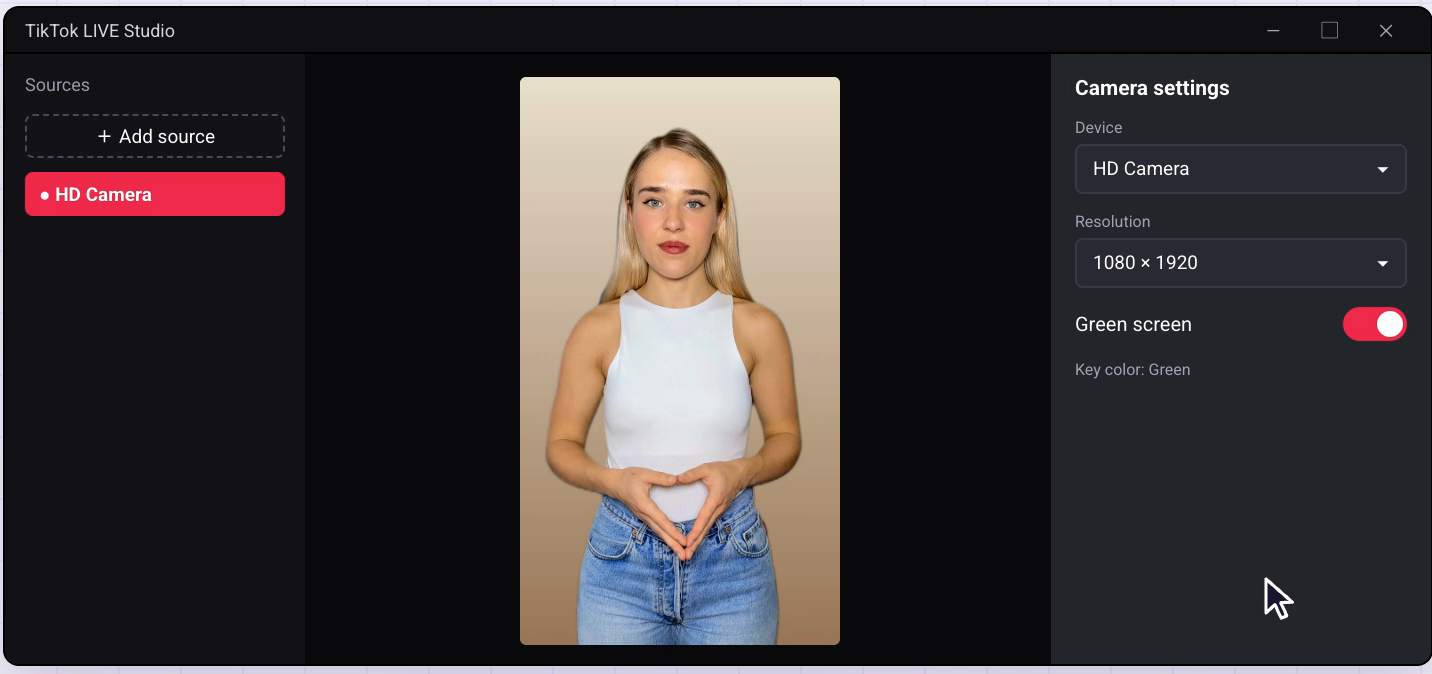
Build a live room, add your products and scripts (or let AI Stream Mode write them from the product info), and go live. The influencer greets viewers, pitches, shows products up close, and answers the chat on its own through Smart Live Chat. It streams to TikTok Shop, Shopee, YouTube and more than a dozen platforms in total, with product pop-ups and built-in risk checks on every stream. When a human touch is wanted, a real colleague can step in instantly with Human Takeover — a real person on camera while BOX drives the mouth to the script.
Make short-form videos
The same avatar turns into short-form videos for your feed, ads and product pages — so the influencer that sold live last night is posting clips this morning, in the same look and the same voice. One persona, one brand face, across live and on-demand content.
Keeping your AI influencer on-brand
Owning the influencer only pays off if it stays on message, and this is where a brand-owned avatar beats a rented human. BOX gives you three levers to keep it consistent:
- Host persona & banned words — set the voice and tone once, and list the words or claims the influencer must never use. It will not go off-script in a way that embarrasses the brand.
- Knowledge base — the up-to-20,000-character brief is the single source of truth for prices, policies and answers, so every reply is accurate.
- Segmented Variation — the script engine rewrites lines so no two runs are identical, which keeps a 24/7 stream from sounding like a loop while staying inside your wording.
Because the influencer is AI, be upfront about it: AI disclosure is standard good practice for AI live selling, and BOX is built to run disclosed, compliant streams rather than to pass an avatar off as a human.
Scaling from one influencer to a whole roster
A single PC runs a single live room. The brand-owned model becomes powerful when you scale it: build a team of avatars, each with a different look and voice, run co-host mode so two hosts share one room and sell together, and schedule shift changes so a fresh influencer in a new outfit takes over on time.
To run more rooms at once you add more PCs and more Syntopia BOX accounts — one account and livestream slot per concurrent room. There is no hard cap: it scales to five rooms, ten, twenty, a hundred and beyond — effectively unlimited, growing with the PCs and accounts you put behind it.
Which influencer setup fits your brand?
Frequently asked questions
What is a custom AI influencer avatar?
It is a brand-owned AI digital human — a synthetic presenter you design once and control. You set its look (an avatar model trained from a short video), its voice (a cloned voice model), its personality (a host persona) and its knowledge, and it can host live shopping streams and make short-form videos. It is AI, not a real person and not a copy of one.
How do I create an AI influencer with Syntopia BOX?
Four moves. First design the persona — who it is, which market, and what it must never say. Then build the look by training an AI digital human from a short video (a V5 look is quickest). Then clone a voice from a few seconds of audio; with V10 it supports 600+ languages, trained per market. Finally connect an AI model (OpenAI, DeepSeek) and load a knowledge base so it writes scripts and answers viewers in real time.
Is a custom AI influencer the same as cloning a real person?
No. A brand-owned AI influencer is a synthetic AI avatar — you design it, and the brand owns it. That is different from Human Takeover mode, where a real person sits in front of the camera and BOX only moves their mouth to the script; in that mode it is a real human, not an avatar.
Can one AI influencer sell in more than one language?
Yes. V10 supports 600+ languages, including Brazilian Portuguese. For each market you record a short sample in that language, train your V10 voice on it and write that market’s script in that language, so the same recognisable influencer goes live in your own brand voice, market by market.
Can the same avatar make short videos as well as go live?
Yes. The same AI influencer that hosts live shopping streams can be turned into short-form videos for your feed, ads and product pages, keeping the same look and voice across live and on-demand content.
How many AI influencers can a brand run at once?
A single PC runs one live room. To run more at the same time you add more PCs and more Syntopia BOX accounts — one account and livestream slot per concurrent room. It scales to five, ten, twenty, a hundred rooms and beyond; there is no hard limit, only the PCs and accounts behind it. You can also build a team of avatars and use co-host mode and scheduled shift changes.