

Is it legal to sell live with an AI host? In general, yes — using an AI avatar to present a live shopping stream is legal in major markets, as long as you follow the same advertising and consumer-protection rules a human seller must follow, disclose the AI presence where that is expected, and only use an avatar and voice you have the right to use. There is no broad ban on AI hosts in the EU, US or Southeast Asia as of 2027. But two things matter: the law and the platform’s policy are separate questions, and both vary by region and change over time.
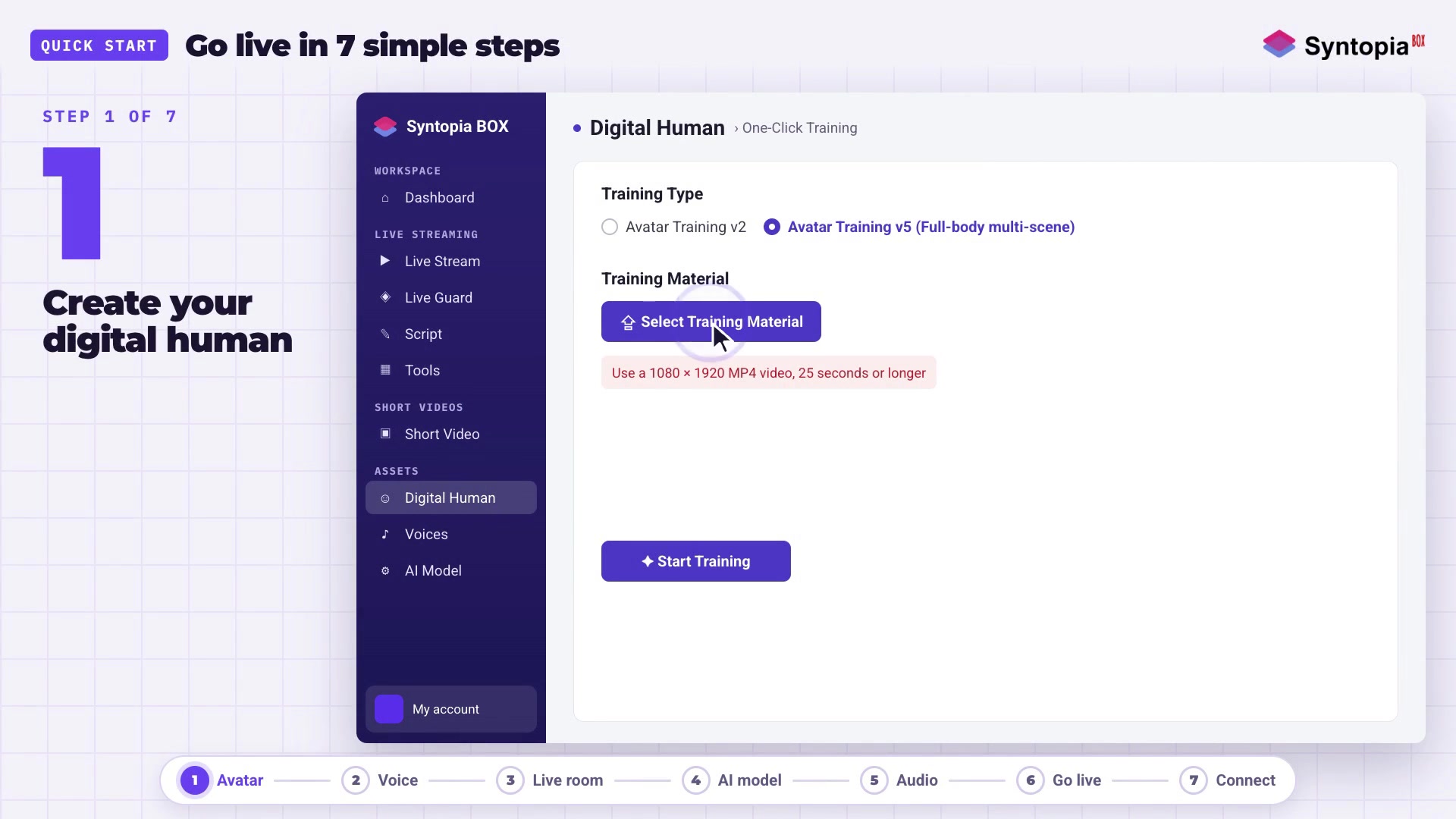

This article explains how AI live selling is generally treated and how to operate responsibly with Syntopia BOX (the on-premise Windows app, not Syntopia Cloud). It is not legal advice and does not cover your specific situation. Laws differ by country and change; consult a qualified lawyer in your market before relying on anything here.
Legal vs platform-policy: two different questions
The single most common mistake is treating “is it legal” and “is it allowed on my platform” as one question. They are not.
- The law is set by your country or region: advertising standards, consumer-protection rules, disclosure requirements, and likeness and data-protection rights. It applies to you regardless of which platform you stream on.
- Platform policy is set by TikTok, YouTube, Shopee and others. It can be stricter or more specific than the law, and a platform can forbid something the law permits.
You must satisfy both. The rest of this guide treats the legal side first, then points you to the per-platform rules.
AI-disclosure expectations
The clearest trend across markets is toward disclosure: viewers should be able to tell they are watching an AI-generated avatar rather than a live human. Some regions are codifying this; many platforms already expect it. You do not need to over-engineer it — building a clear, honest indication of the AI presence into your stream is the safe default, and it is good practice even where it is not yet strictly required. When viewers know what they are watching, you avoid the deceptive-practice risk that disclosure rules are designed to prevent.
Advertising and consumer-law basics
Here is the principle that cuts through most of the complexity: advertising and consumer-protection rules apply to the content of your stream, not to who presents it. An AI host does not lower the bar. That means:
- Claims must be truthful and substantiated — the same standard a human host is held to.
- Prices, offers and terms must be accurate and not misleading.
- Sensitive categories (health, supplements, finance) carry the same guardrails they would with a human; an AI avatar saying it does not make a dubious claim safe.
- You remain responsible for everything said on stream.
This is why on-stream moderation and script guardrails matter: they keep the AI host inside the rules you are already bound by.
Likeness and voice consent
A distinctly AI-era issue: whose face and voice is your avatar built from? You should only train an avatar model and voice model from a likeness and voice you have the right to use — your own, or a presenter who has given clear, documented consent. Using a real person’s face or voice without permission can breach likeness, publicity, data-protection and consumer laws, depending on the region.
Syntopia BOX is designed around this: you train from your own training footage and from a voice sample you record per language, rather than lifting someone else’s identity. That keeps the ownership question clean.
Use your own avatar and your own voice model — or a presenter who has clearly consented. That one habit removes most of the legal risk unique to AI hosting.
How the rules differ by region
Broad, non-exhaustive framing (again: not legal advice, and evolving):
| Region | General posture | What to watch |
|---|---|---|
| EU | AI hosting is broadly permitted; strong emphasis on transparency and consumer protection. | Clear AI disclosure; data-protection and consumer-rights rules. |
| US | Generally permitted; advertising-standards and deceptive-practice rules apply. | Truthful claims; disclosure expectations; state-level publicity/likeness rights. |
| Southeast Asia | Live commerce is mature and AI hosting is widely used; rules vary by country. | Per-country advertising rules and platform-specific requirements. |
The common thread everywhere is the same: be truthful, disclose the AI, and use a likeness you own. If you sell cross-border, treat each market separately.
How to stay compliant with Syntopia BOX
Keeping a human in the loop is not only an operational choice — it is a compliance safety valve. Our guide on whether you need a real person explains how that works, and standard mode vs AI stream mode covers the presenting options.
Platform-rule roundup
Once you are comfortable on the legal side, confirm the policy for each platform you use — these are separate rules and they change:
- Is AI live selling allowed on TikTok Shop?
- How to get whitelisted for AI live selling — the approval step some platforms require.
- For the full picture of how AI hosting fits into live commerce, see the AI live selling pillar guide.
In short: selling live with an AI host is generally legal in the EU, US and Southeast Asia when you stay truthful, disclose the AI, and use a likeness you own — but check your region and your platform, and when in doubt, ask a lawyer. This article is general information only and not a substitute for legal advice.
Frequently asked questions
Is it legal to sell live with an AI host?
In general, using an AI avatar to present a live shopping stream is legal in major markets, provided you follow the same advertising and consumer-protection rules a human seller must follow, disclose the AI presence where that is expected, and only use an avatar and voice you have the right to use. There is no broad ban on AI hosts in the EU, US or Southeast Asia as of 2027 — but rules vary by region and evolve, and platform policies are separate from the law. This is general information, not legal advice; confirm specifics for your market.
Do I have to disclose that my live host is an AI?
Increasingly, yes. Many markets and platforms expect viewers to be told, or to be able to tell, that they are watching an AI-generated avatar rather than a live human. The simplest safe practice is to make the AI presence clear and build disclosure into the stream. Requirements differ by region and platform and are tightening over time, so check what currently applies to you.
Can I use anyone's face or voice for my AI avatar?
No. You should only build an avatar model and voice model from a face and voice you have the right to use — your own, or a presenter who has given clear consent. Using a real person’s likeness or voice without permission can breach likeness, publicity, data-protection and consumer laws. Syntopia BOX lets you train from your own footage and a voice sample you record, which keeps you on solid ground.
Is the law the same as the platform's rules?
No — they are two separate questions. The law is set by your country or region (advertising standards, consumer protection, disclosure, likeness rights). Platform policy is set by TikTok, YouTube, Shopee and others, and can be stricter or more specific than the law. You must satisfy both: something the law permits may still be against a platform’s rules, and vice versa.
Does the AI host change my responsibility for claims made on stream?
No. You remain responsible for every claim made in your stream, whether a human or an AI avatar says it. Advertising and consumer-protection rules apply to the content, not the presenter, so scripts must be truthful and substantiated, and sensitive categories (such as health or finance) carry the same guardrails they would with a human host.