

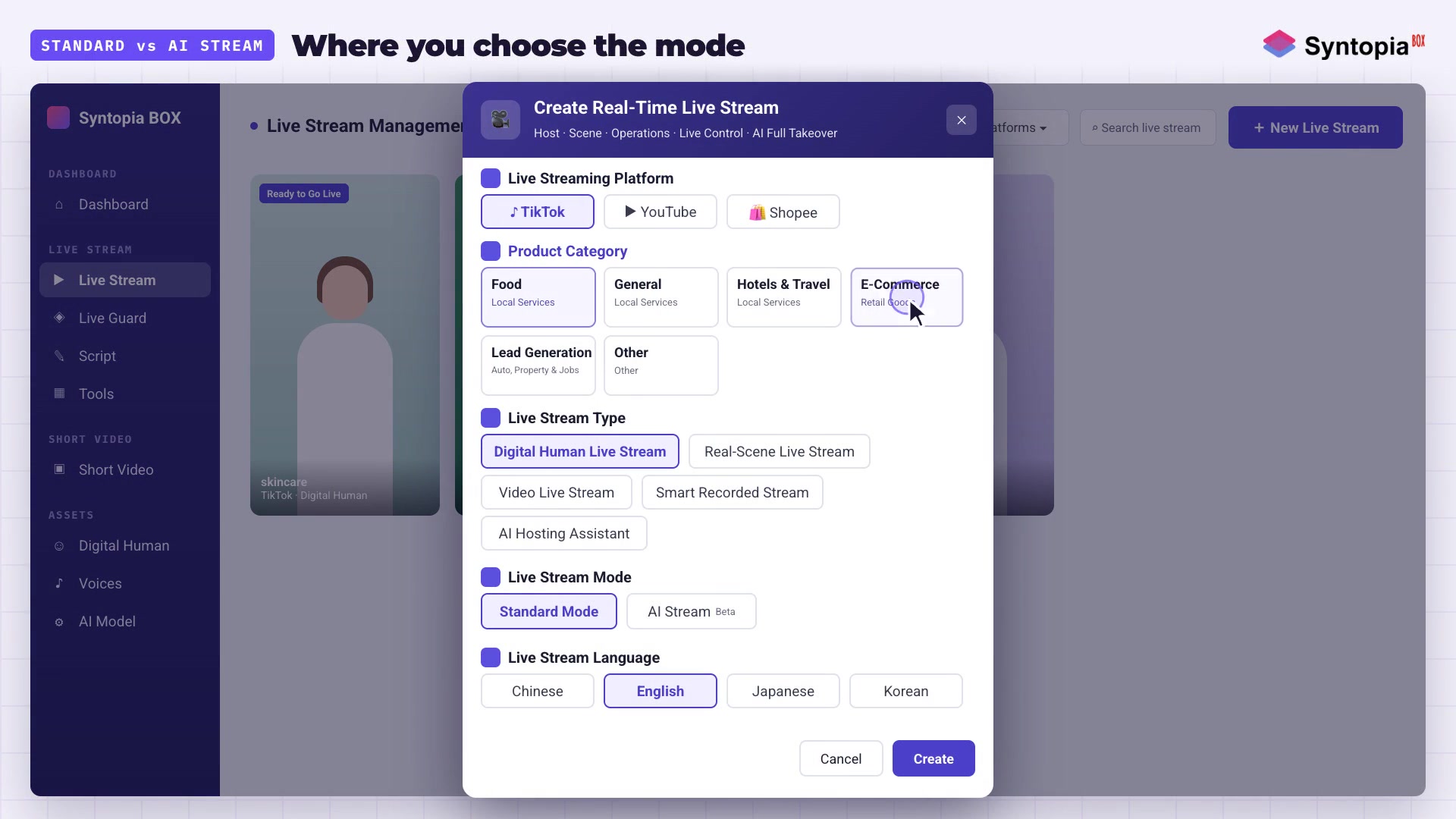
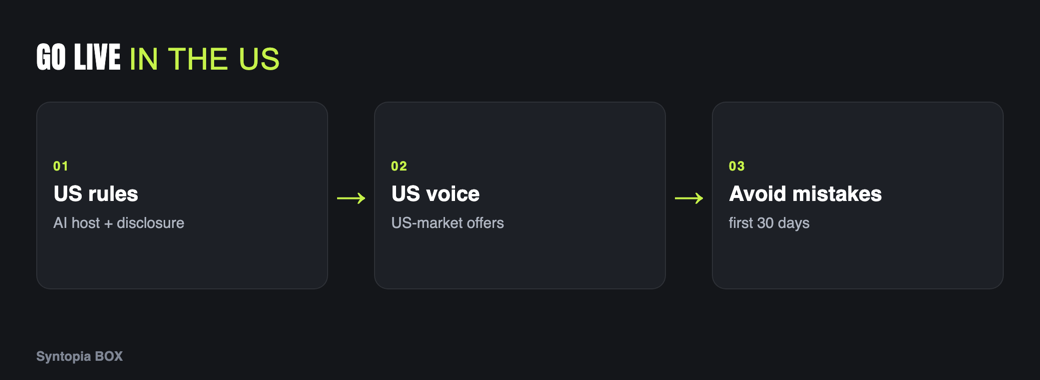
AI live selling in the USA runs mostly on one surface: TikTok Shop. US live commerce is younger than Asia’s but growing fast, and the sellers getting ahead are the ones live consistently with a host that fits a US audience. This guide covers TikTok Shop’s expectations for AI hosts, US disclosure norms, building a US-market avatar and voice, and the first-month mistakes that trip new sellers up — all with Syntopia BOX.
US live commerce in 2027
Live shopping arrived later in the US than in Asia, but it has moved from novelty to habit. TikTok Shop is the centre of gravity: it is where US buyers discover products in live rooms and check out in the same session. For sellers, the opportunity is that the market is still being shaped — consistency and coverage win share now in a way they will not once the field is crowded. The constraint is the same as everywhere: you cannot be live enough hours with one human host.
That timing is the whole argument for moving now. In a market still forming its habits, the sellers who are live early, often and reliably are the ones buyers learn to return to, and the platform learns to surface. A late entrant has to buy that attention back; an early one earns it. An AI host is how a seller of any size holds that consistent presence without building a round-the-clock human team before the revenue exists to pay for it.
TikTok Shop rules for AI hosts
Before you rely on an AI host, confirm what the platform currently allows. Policies on AI and automated hosting evolve, so treat the current rules as the source of truth — our standing explainer on whether AI live selling is allowed on TikTok Shop is the place to start. In general terms, keep a real operator accountable for each stream, keep the host on-script and within claim rules, and do not misrepresent the nature of the stream. This is general guidance, not legal advice.
- Confirm TikTok Shop’s current policy on AI hosting for your account type.
- Keep a real operator accountable and able to take over.
- Keep any required AI disclosure visible.
- Hold the host to accurate, compliant product claims.
Disclosure expectations in the US
US buyers and regulators expect advertising to be truthful and not misleading, and expectations around disclosing AI and automation are tightening. The safe posture is transparency: do not pass an AI host off as a specific real person, keep any platform-required AI labelling in place, and make sure product claims are substantiated. Use an avatar and voice you have the clear right to use. Again, this is general information rather than legal advice — check current requirements for your category.
Transparency is also good selling, not just good compliance. US buyers respond to a host that is upfront and specific far better than to one that overpromises, so treating honest disclosure as part of the pitch tends to help conversion rather than hurt it. Build it in from the start rather than bolting it on later.
A US-market avatar and voice
Fit the host to the audience. Train an avatar that suits your US buyers and a voice that sounds natural to them: record a clean English sample and train a voice model so the accent and tone land for a US room. The trained avatar can hold and demonstrate your products on camera, which matters for a US audience that expects a confident, demo-led stream.
Scripts and offers for US buyers
US live rooms reward energy, clear value and a strong call to action. Write scripts with a sharp hook, an honest demonstration, and an unambiguous offer and deadline. Let smart live chat handle the questions — shipping times, sizing, returns — in real time, since fast, accurate answers are what convert a hesitant US viewer. Keep claims truthful; US buyers are quick to call out overselling, and accurate expectations also keep returns down.
Pay particular attention to the practical questions that stall a US checkout: delivery speed, the returns window, whether something is in stock, and how a size runs. These come up in almost every room, and a stream that answers them instantly feels trustworthy in a way a slow or silent one never does. Build the most common answers into your smart chat setup and your script so they are covered whether or not anyone asks out loud.
In a young market, the seller who is live consistently and answers every question wins the share that is still up for grabs.
Whitelisting in the US
Some accounts need approval before AI hosting runs smoothly. Budget time to get whitelisted and to set up your shop correctly rather than discovering a block on launch day. Getting the account, catalogue and compliance right before you scale rooms saves the most common early stumble.
Avoiding first-month mistakes
Get the first month right and you can then scale rooms and, when you are ready, expand to other markets — the UK guide is the natural next step. Current plans are on the pricing page.
Frequently asked questions
Is AI live selling allowed on TikTok Shop in the US?
Platform policy on AI and automated hosting evolves, so treat TikTok Shop’s current rules as the source of truth before you rely on an AI host. In general, keep a real operator accountable for each stream, keep any required AI disclosure visible, hold the host to accurate claims, and do not misrepresent the stream. Our standing explainer on whether AI live selling is allowed on TikTok Shop is the place to start. This is general guidance, not legal advice.
What are the disclosure expectations for AI hosts in the US?
US advertising is expected to be truthful and not misleading, and expectations around disclosing AI and automation are tightening. The safe posture is transparency: do not pass an AI host off as a specific real person, keep any platform-required AI labelling in place, substantiate product claims, and use an avatar and voice you have the clear right to use. Check current requirements for your category; this is general information, not legal advice.
How do I set up a US-market AI host?
Train an avatar that suits your US buyers and a voice that sounds natural to them by recording a clean English sample and training a voice model so the accent and tone land for a US room. The trained avatar can hold and demonstrate your products on camera, which matters for a US audience that expects a confident, demo-led stream.
Do I need to get whitelisted to sell live in the US?
Often, yes. Some accounts must be approved before AI hosting runs smoothly, so budget time to get whitelisted and to set up your shop and catalogue correctly before launch day rather than discovering a block when you go live. Getting the account and compliance right before scaling rooms avoids the most common early stumble.
What mistakes do new US live sellers make in the first month?
The common ones are going live before the account is set up and whitelisted, looping a single thin script so the room feels dead, ignoring the chat, overselling with inflated claims that draw complaints and returns, running too few hours to use the model well, and not tracking per-room results. Fix compliance first, rotate scripts, tune smart chat, keep claims honest, add off-peak hours and measure.