

Syntopia BOX Guide
A good-looking avatar does not sell anything — a persona that fits the product and audience does. This guide covers designing an AI host persona that converts in AI live selling, layered on top of the create-an-avatar steps, not instead of them.
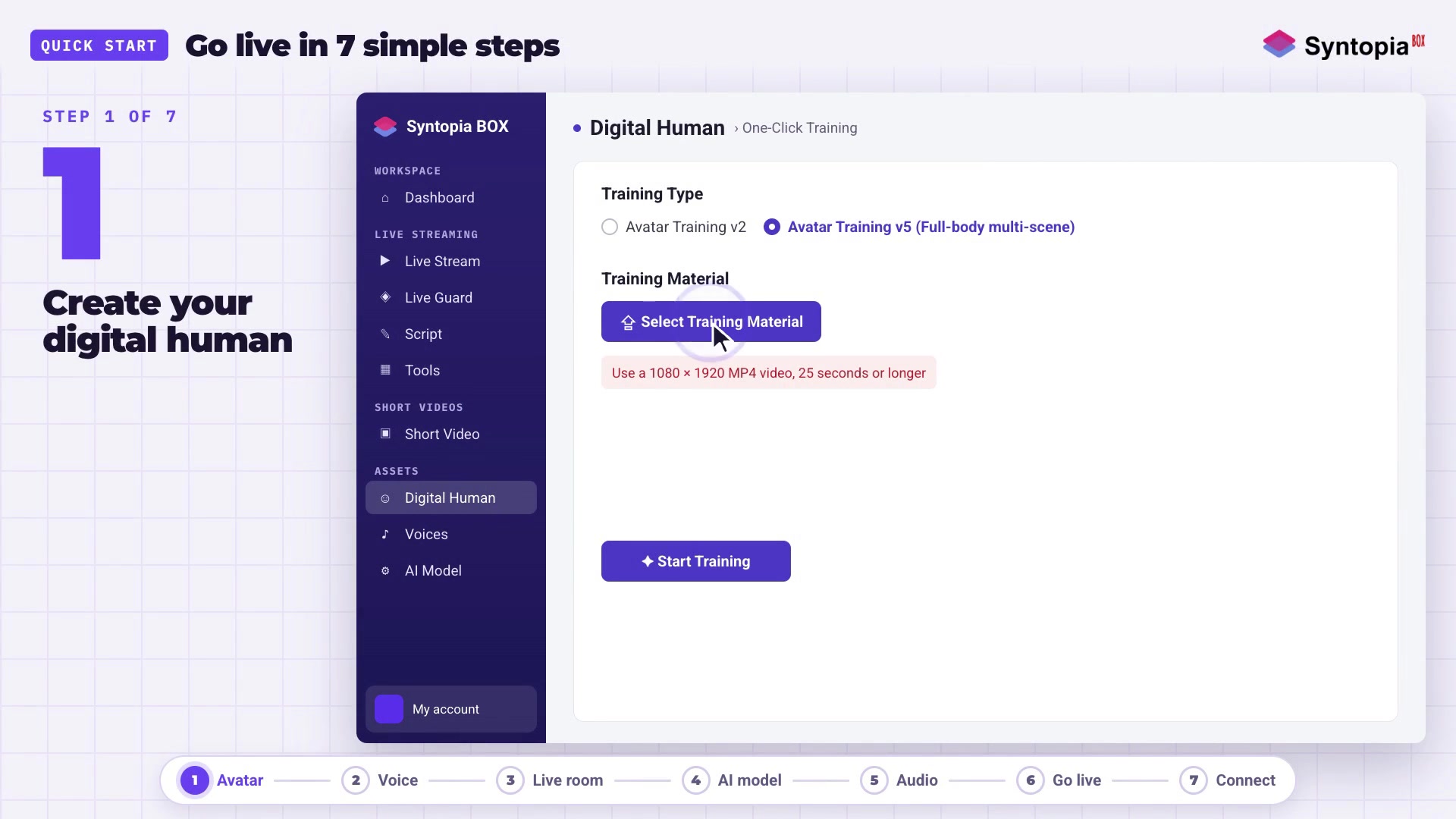
- Design the persona first — who the host is and who they are for — then make the avatar, voice and scene serve it.
- Match the avatar to your audience and vertical; trust signals differ across categories.
- Record and train a voice model per language so the host sounds right in each market.
- Write a selling tone — loops to the offer, clear asks, honest urgency — not a presenter’s brochure voice.
- Keep the scene and wardrobe coherent with the persona, then A/B test personas and promote the winner.
A good-looking avatar does not sell anything. A host with a persona that fits the product, the audience and the moment does. In AI live selling, design is a conversion lever, not a cosmetic one — the look, the voice, the tone and the setting either add up to someone a viewer trusts enough to buy from, or they do not. This guide is about designing that persona, on top of the how-to-create steps, not instead of them.
Looks aren’t enough — persona converts
Viewers do not buy from a face; they buy from a presence. A persona is the sum of who the host appears to be: their energy, how they speak about the product, what they seem to know, how they treat questions. Two hosts with the same avatar and different personas will convert completely differently. Design the persona first — who is this host, who are they for, why should this audience trust them — and let the avatar, voice and scene serve that answer rather than lead it. The sellers who struggle with AI hosts almost always skipped this step: they picked a face, pointed it at a catalog, and wondered why it felt hollow. The ones who convert started with the person they wanted the viewer to meet, and built outward from there.
Matching the avatar to your audience and vertical
The right host looks like someone the buyer would believe in that category. A host selling skincare, power tools and collectibles should not look and sound identical, because the trust signals differ: expertise reads differently than relatability, and age, style and setting all carry meaning to a buyer scanning for “does this person get it”. Start from your audience and vertical, then pick or build the custom avatar that matches, rather than choosing a look you personally like and hoping it fits.
Voice: record and train a voice model that fits the brand
Voice carries more of the sell than most sellers expect — pace, warmth and clarity shape trust second by second. In Syntopia BOX you record a voice sample and train a V10 voice model per language, so the host sounds right for each market rather than running one voice through a translator. Building the voice model is the how-to; the design decision is which voice fits the brand: calm and expert for high-consideration goods, bright and quick for impulse buys. Record and train the voice that matches the persona you defined, in each language you sell in.
Tone and pacing for selling, not presenting
A presenter informs; a seller moves people to act. The difference is in the pacing and the asks: a selling host loops back to the offer, invites the tap, answers the objection and keeps a light urgency that never tips into pressure. Write the tone into the script — short sentences, clear CTAs, frequent but honest offers — so the persona sounds like someone selling, not someone reading a brochure. Pacing is a design choice as much as voice or look.
Scene and wardrobe that build trust
The setting frames the host. A cluttered or mismatched scene undercuts an otherwise strong persona, while a clean, on-brand set that suits the category quietly signals legitimacy. Wardrobe works the same way — it should match who the host is meant to be to this audience. None of this needs to be expensive; it needs to be coherent, so every visual element points at the same persona rather than fighting it.
Testing personas
You will not guess the best persona on the first try, and you do not have to. Run personas against each other the same way you test anything else — different avatar, voice or tone, one variable at a time, measured on conversion. The A/B testing method applies directly: because the AI host reproduces each persona exactly, the comparison is clean, and the winner becomes your house host.
Common persona mistakes
Design the persona, dress the avatar, voice and scene around it, then test — that sequence is what separates a host that looks fine from a host that sells. For the broader picture of where the host fits, start at the AI live selling pillar.
Frequently asked questions
What makes an AI host convert well?
A persona that fits the product, audience and moment — not just a good-looking avatar. Viewers buy from a presence: the host’s energy, how they talk about the product, how they handle questions. Design the persona first, then let the avatar, voice, tone and scene all serve it.
How do I choose an avatar for live selling?
Start from your audience and vertical, then pick or build an avatar that looks like someone a buyer would trust in that category. A skincare host and a power-tools host should not look identical, because expertise and relatability read differently depending on what you sell.
Does the voice matter for an AI live host?
A great deal. Pace, warmth and clarity shape trust second by second. In Syntopia BOX you record a sample and train a voice model per language, so the host sounds right in each market. Match the voice to the persona — calm and expert for high-consideration goods, bright and quick for impulse buys.
How is a selling host different from a presenter?
A presenter informs; a selling host moves people to act. The selling host loops back to the offer, invites the tap, answers objections and keeps a light, honest urgency. Write that pacing and those asks into the script so the persona sounds like someone selling, not reading a brochure.
How do I know which persona works best?
Test them. Run different avatars, voices or tones against each other one variable at a time, measured on conversion. Because an AI host reproduces each persona exactly, the comparison is clean and the winner becomes your house host.